Running Physio Auckland | Paul White | Auckland Physiotherapy Newmarket Skip to main content
Running Assessment & Injury Rehabilitation · Newmarket Auckland

Running Injuries.
Treated by People Who Run.

Whether you're dealing with a persistent niggle or building toward your next race, our physiotherapy team understands what it means — and what it costs — to not be able to run.

70%
Runners injured
each year
5K→42K
All distances
all levels
Video
Gait analysis
every assessment
No GP referral needed
ACC registered
Video gait analysis included
Newmarket — easy parking
All levels welcome

Running is a dynamic activity. We treat it that way.

Across all the runners we see at our Newmarket clinic, one pattern consistently stands out: people need to be stronger — not just in a general sense, but dynamically stronger. Running loads the body in ways that walking and gym work simply don't replicate, and rehabilitation needs to reflect that reality.

Whether it's a long-standing niggle, a new injury from ramping up your training, or a recurring problem that hasn't been properly addressed, we look at the root cause — not just the symptoms — and build you back with a programme matched to how running actually works.

Our programme is led by Paul White, a physiotherapist with a focused interest in running injuries and gait analysis. He works with runners of every level, from first-timers aiming at a Parkrun to marathoners wanting to run smarter for longer.

70%
of runners experience an injury every year
80%
of running injuries are considered preventable
Most are avoidable
with the right assessment, loading strategy and programme design
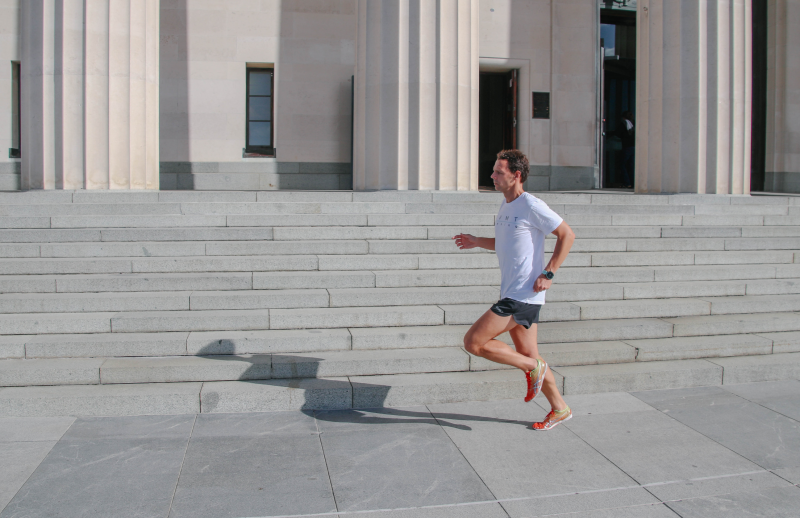
Paul White, Physiotherapist at Auckland Physiotherapy, running in a park
Paul White
Physiotherapist · Running Programme
Gait Analysis Running Injuries UK Trained

Paul White

If you've spotted someone filming a patient running in our Newmarket carpark, that's Paul. Video analysis is central to everything he does.

Paul is a physiotherapist with a particular focus on running injuries and running-related assessment. He has had the opportunity to learn from some of the world's leading running analysts in the UK, and brings that knowledge into a practical, evidence-based approach that looks at how you move and why injuries happen — not just how to manage them once they do.

His approach is built on a key principle: running is a dynamic, high-load activity, and rehabilitation needs to match that. A programme that gets you back to jogging is not the same as one that prepares you to run well. Paul focuses on building the specific dynamic strength and movement patterns that running demands, progressing you systematically from wherever you currently are.

"One of our rules is simple: if you can hop, you are strong enough to run. That single test says more about your readiness to return than most other measures." — Paul White, Physiotherapist

Paul works with runners across the full spectrum — people just finding their feet with running, those training for their first half marathon, and experienced runners who keep getting injured and aren't sure why.

Common running injuries we see

These are the injuries we encounter most regularly in runners at our clinic — and where Paul's assessment-first approach makes a real difference.

🦵
Achilles Tendon Pain

Tendinopathy and insertional pain caused by repetitive loading, often linked to a sudden increase in training volume or insufficient dynamic calf and ankle strength.

🦴
Knee Pain

Patellofemoral pain, IT band syndrome and runner's knee — commonly driven by hip or ankle control deficits that alter how load passes through the knee joint.

💪
Calf & Hamstring Strains

Among the most common lower limb muscle injuries in runners, particularly with speed work or in athletes whose training load exceeds their tissue capacity.

🦷
Shin Splints & Bone Stress

Most often the result of doing too much, too soon. Increasing weekly distance by more than 10% significantly raises the risk of tibial stress injury.

🦶
Foot & Ankle Pain

Plantar fasciitis, ankle instability and metatarsal stress injuries — often driven by weakness in the intrinsic foot muscles and poor dynamic loading mechanics.

🏃
Hip & Gluteal Pain

Gluteal tendinopathy, hip flexor strains and groin pain that limit stride length and running economy, assessed and treated with targeted loading programmes.

Ready to get your running sorted?

Book a Running Assessment with Paul

Dynamic strength is at the heart of it.

Running is fundamentally different from walking or cycling. The key distinction is that running is a high-load, dynamic movement — and that must be reflected in how we rehabilitate and strengthen runners.

There is a time and place for conventional strengthening, but to prepare someone to run again — and to run well — we use progressively dynamic exercises that mirror what running actually demands. Our focus starts at the foot and ankle, which must dynamically propel you forward with every single stride.

We don't rush this process. Moving too quickly back into running is one of the most common reasons people re-injure. But we also don't hold people back unnecessarily — the progression below gives a clear framework for what "ready to run" actually means.

Progressive return-to-run pathway

1
Calf Raise
Establish basic ankle and calf strength before any impact loading
2
Calf Raise Walk
Introduce movement while maintaining ankle control and dorsiflexion
3
Jumping
Progress to bilateral impact — learning to absorb and generate force
4
Hopping Forward
Single-leg loading that closely mirrors the running movement pattern
Return to Running
A structured, graduated plan matched to your goals and current fitness

What your assessment includes

Every running assessment with Paul covers the following — tailored to where you are now and what you're trying to achieve.

Video Gait Analysis

Paul films your running and reviews it in detail with you. You'll see exactly what's happening in your stride — heel strike, cadence, arm drive, trunk position — and understand clearly what needs to change and why.

Full Physical Assessment

A thorough clinical screen to identify the strength, mobility and control deficits contributing to your injury or movement inefficiency — so the programme addresses the cause, not just the complaint.

Dynamic Strength Programme

Targeted exercises built around your specific findings — progressively loading you through the dynamic movements that running demands. Not a generic routine, but one designed around how your body actually moves.

Personalised Running Plan

A structured return-to-run or performance programme matched to your goals and current capacity — whether that's a first Parkrun, a half marathon, or getting back to your pre-injury training load without relapse.

Every type of runner is welcome.

Paul works with runners at all levels. The fundamentals of good running — and of running injury — are surprisingly consistent regardless of pace or distance.

5km · Parkrun · Beginners

New & Returning Runners

Getting started or coming back after a break? We'll lay the right foundations from day one — sound technique, a sensible training build and the body awareness to avoid the injuries that stop most beginners from continuing.

10km · Half Marathon

Recreational Runners

Training for an event brings its own injury risks, usually from increasing load faster than the body can adapt. We'll identify your weak links and keep you healthy through the build-up — not sidelined in race week.

Marathon · Trail · Experienced

Regular & Experienced Runners

For runners who've been at it for years, getting to the bottom of why injuries keep happening is often more valuable than treating each one in isolation. We look at the patterns and address them properly.

What to expect at your first appointment

A clear, structured process from your first visit through to confident, independent running — with fewer days unable to train.

1
Full Assessment

Paul reviews your history, injury pattern and goals. A clinical screen identifies the deficits that are contributing to your problem.

2
Video Analysis

We film your running and go through it together. You'll see what's happening and understand what to change — and why it matters.

3
Your Programme

A specific strength and running programme built around your assessment findings — not generic, but designed for how you move.

4
Run Stronger

Progress reviews keep you on track. The goal is a runner who manages their load well, gets injured less and enjoys their running more.

Have a running injury or want to move better?

Book with Paul →

Ready to sort your running?

Get in touch with Paul and the team at our Newmarket clinic to discuss your situation and book a running assessment.

Or email us at [email protected] · 8 George Street, Newmarket, Auckland

Frequently Asked Questions

Runners get injured often because running is high-impact and repetitive, with sudden load spikes outpacing tissue adaptation—especially on Auckland's hilly trails or during event training.​

Key factors include rapid mileage or intensity increases (e.g. prepping for a half-marathon), weak glutes/hips/core leading to poor form, inadequate recovery (sleep, easy days), worn-out shoes, and unchanging routes like concrete roads. New Zealand runners often face extra stress from uneven terrain, wind or wet conditions.​

Auckland Physiotherapy's running physios, like Dr Paul White, analyse your form, strength and training to address these root causes, helping you build resilience

Normal post-run soreness feels symmetrical (both legs), improves within 48–72 hours with rest/light activity, and fades as you warm up. A serious injury worsens with load, changes your gait, or persists despite easy days.​

Red flags include:

  • Sharp, one-sided pain (e.g. bone-focused shin or foot pain suggesting stress fracture).​

  • Swelling, bruising, limping or night pain that disrupts sleep.​

  • Pins/needles, weakness or pain spreading to hip/back.​

If unsure, don't push through—see a physio early. At Auckland Physiotherapy, we differentiate niggles from issues needing imaging or rest via detailed assessments.

Rest duration depends on injury severity and tissue type: minor muscle strains may need 1–3 weeks off running, while Achilles issues or shin splints often require 4–8 weeks of modified loading, and stress fractures 8–12 weeks minimum with medical oversight.​

Pain-free walking, strength and cross-training (bike/swim) guide recovery—total bed rest rarely helps. Restart with a graded plan: walk 10–20 mins, add jog intervals every other day, cap weekly increases at 10%, and monitor for flare-ups.​

Auckland Physiotherapy tailors return-to-run programmes, like those praised in reviews for quick, video-guided plans, to get you back safely.

Prevent running injuries by building gradually: increase mileage/intensity by no more than 10% weekly, prioritise 1–2 rest/easy days, and add hip/core/calf strength 2–3x/week.​

Key habits:

  • Dynamic warm-up (leg swings, skips) and cool-down stretches.​

  • Rotate shoes every 500–800km; get gait analysis for fit.​

  • Vary terrain/speed to avoid overload (mix roads, trails, intervals).​

  • Fuel recovery with sleep, protein and monitoring fatigue.​

For Auckland runners tackling Waitakere trails or city events, our running assessments spot risks early and provide custom plans.

See a physio for running injuries if pain lasts >1 week despite rest, recurs often, alters your form, or hits tendons/bone—self-managing risks longer downtime. ACC may cover if injury-related (e.g. strains from falls), reducing out-of-pocket costs.​

In New Zealand, initial running assessments cost $150–250, follow-ups $100–180 (Auckland averages); private health or Southern Cross often rebates. Auckland Physiotherapy confirms fees on booking, offers ACC guidance, and delivers targeted rehab as per reviews ("one session... rehab exercises to fix").​

Contact us for a precise quote and to check eligibility—early intervention keeps you running.

Auckland Physiotherapy Limited © 2026
|
Website Design & Development by