
Calf muscle strains are one of the most common lower limb muscle injuries in addition to hamstring and groin strains. They occur commonly in sports which involve high-speed running or high volumes of running and acceleration and deceleration forces, although they can also occur in the general population with less intense activity. It is unsurprising that the calf gets injured when you consider 3-6 times your bodyweight goes through it when you run! The classic presentation will be a sudden feeling of pain like someone hitting them in the back of the lower leg, sometimes associated with an audible noise.
Like all acute soft tissue injuries there will be a subsequent inflammatory reaction to start the healing process, which may last up to approximately 12 weeks, without any complications. These injuries are graded from 1-3, with 1 indicating that less muscle fibres have been damaged and 3 meaning significantly more muscle fibres and fascia (connective tissue) have been damaged during the injury. This will have direct implications for your prognosis and how long you should expect the injury to resolve and have to go back doing all your normal activities and sports.
Treatment will involve an initial period of rest, and reduced activity whilst your body repairs, and then a graded increase in load on the muscle over months as the healing continues to achieve full function. A recent systematic review identified the main risk factors for a calf injury being increasing age and previous calf injury. This makes sense, as a process called sarcopenia reduces muscle mass as we age and therefore strength and force output of our muscles. In addition to this if a previous muscle injury is not rehabilitated optimally there may be remaining strength deficits, which could be responsible for further injury once the person attempts to get back to their full activities as the calf cannot cope with the forces applied to the muscle.
Anecdotally from personal experience people often feel fine to go back to the sports field when they can walk normally without a limp. The trouble is the forces required to run, jump, walk uphill and sprint are significantly more than required to walk. Therefore, patients often come back in after re-injuring the calf on return to activity. To safely return to normal activities and sports the strength needs to be approximately the same as the other side. Also, strength is only one part of the rehab. Once the strength is optimal we need to work on power, the ability of the calf to produce force quickly, which is what's needed in explosive sports. Hence what seems like a “simple” calf injury will need to be screened fully by a physiotherapist and given the sign off to return to sports to reduce the risk of recurrence.
So if you’re suffering from a new or recurrent calf injury, or any other muscle strain, book an appointment to see one of our physiotherapists to get you back doing what you enjoy.

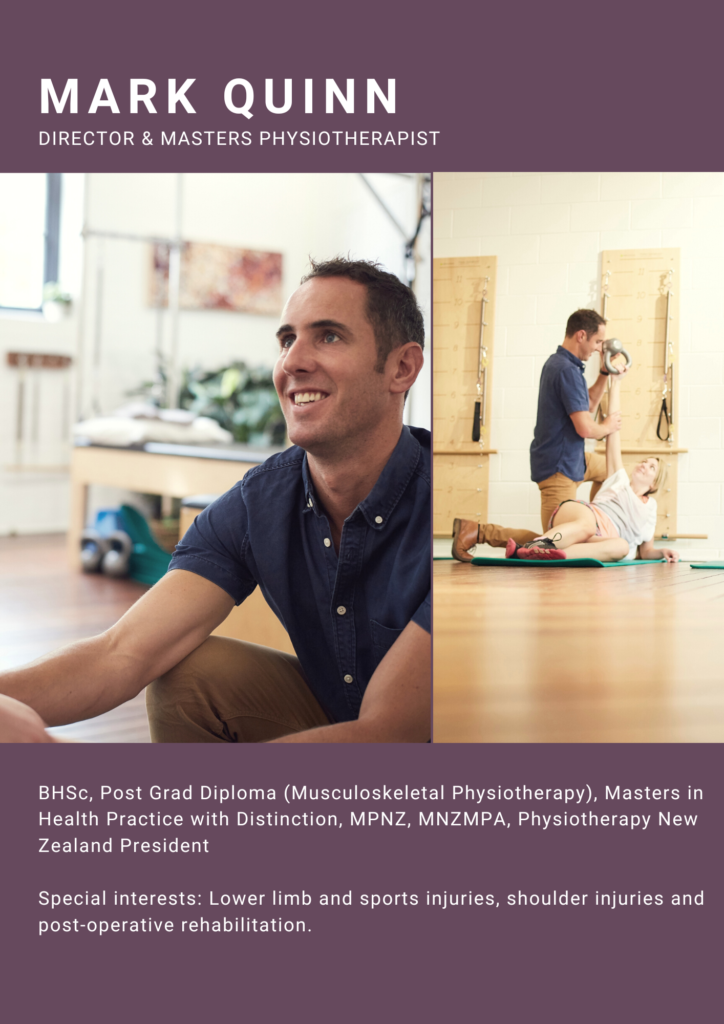
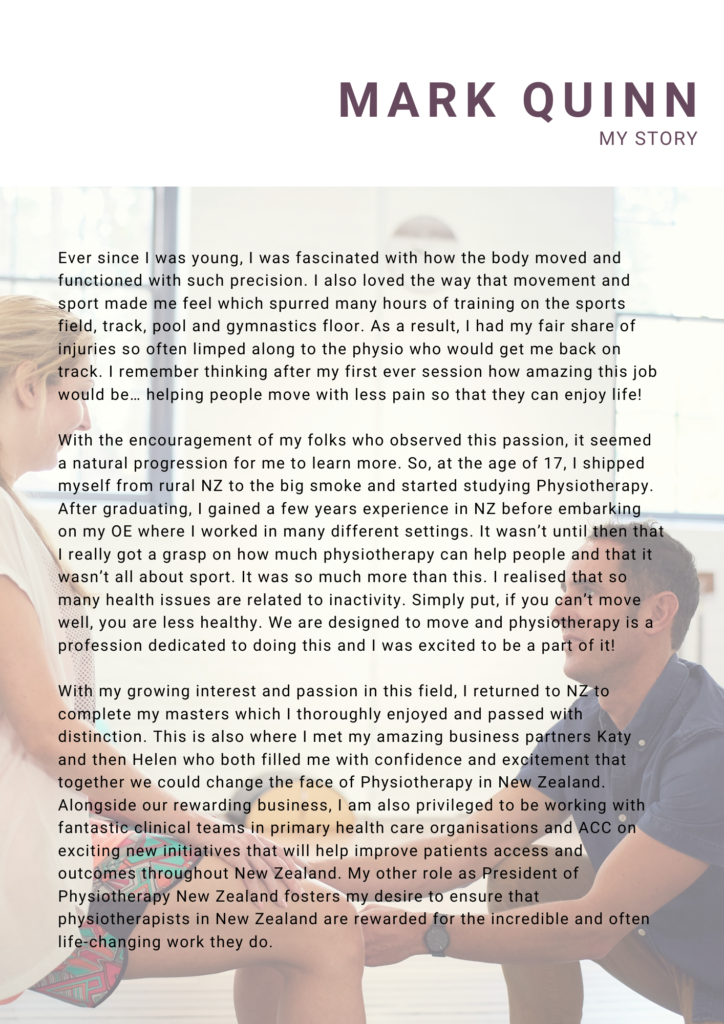
The new year often brings optimism and motivation to do things differently. Many of us are keen to set big goals and kickstart our health. I have 2 favourite quotes that I always find useful at this time of year. The first is by James Clear, author of Atomic Habits (which is an excellent read when it comes to making changes to your health and lifestyle), he says "You don't rise to the level of your goals, you fall to the level of your systems". The takeaway for me is that the goal is not the key to our success, the magic is in creating habits that actually work. It's the small, repeated actions we take and how well we maintain them that matter the most.
Which brings me to my next favourite by Charlie Munger who says "Take a simple idea and take it seriously". No one likes a complex system, it's too hard to maintain. Living a healthy lifestyle isn't rocket science, the simple things work. What is hard is the mindset and patience to keep doing those simple things. So when you're deciding on the changes you want to make to your health this year, try to choose an action that is really simple, something you almost can't fail at. Whilst in the beginning it's likely this won't feel like "enough", trust me, consistency wins over intensity everytime!
If you've got some health goals for the year and want some guidance on fine tuning your systems then book in for our 30 minute complimentary health coaching call. I'd love to get you off to a great start in 2023.
SPINACH SHAKSHUKA
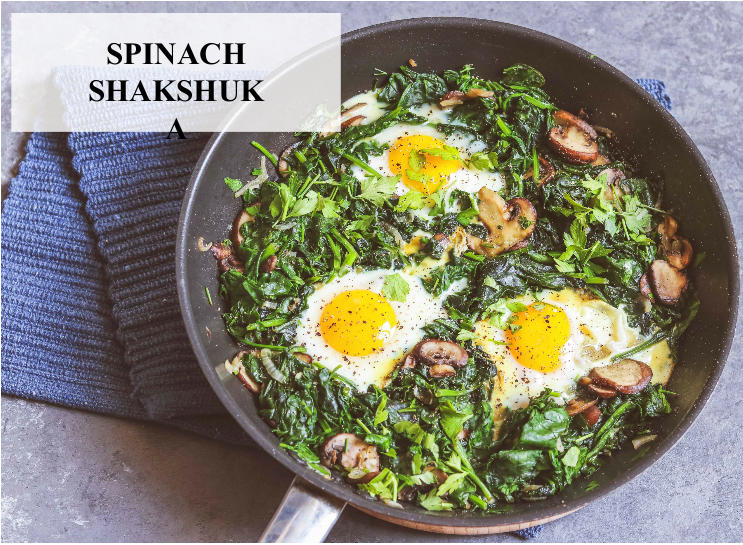
WHAT YOU NEED;
1 tbsp. coconut oil
1 large onion, chopped
2 garlic cloves, crushed
4 cups (300g) mushrooms,
sliced
2 cups (450g) leaf spinach
4 eggs
handful parsley, chopped
WHAT YOU NEED TO DO;
Heat the oil in a large pan over medium heat. Add the onion and
garlic and cook for 2-3 minutes until soft. Next, add the
mushrooms and cook for another 3-4 minutes. Season with salt
& pepper.
Now start adding the spinach to the pan, you will likely have to
do this in batches. Cover the pan with a lid and let it wilt, repeat
this step until all the spinach is in the pan. Stir well and taste for
seasoning.
Make 4 indentations (‘wells’) in the spinach and break an egg in
each. Cook for 5-6 minutes covered with a lid until egg whites
are set.
Dress in fresh parsley and serve.
A Healthy festive option for Christmas
Pav is back on the menu thanks to this quick and simple, fail-proof low-carb recipe.
Decorate your low-carb pavlova with whipped cream (sweetened with your choice of LCHF sweetener if you like), seasonal berries and fresh mint. Or if you’re feeling creative, bake and decorate mini individual pavlovas so you don’t have to share. Delish!
Ingredients;
6 egg whites
1⁄2 teaspoon of cream of tartar (meringue stabiliser)
1⁄3 cup of Natvia granules
1 cup whipping cream (unsweetened)
1 teaspoon vanilla extract 1⁄2 cup
(75g) fresh strawberries, chopped 1⁄2 cup
(75g) fresh blueberries
Handful of fresh mint leaves
Method;
Pre-heat oven to between 120o–150oC.
Whisk the 6 egg whites until thick and frothy, then mix in the 1⁄2 teaspoon of cream of tartar – this is a meringue stabiliser, so it is important not to forget this.
Once stiff peaks have formed (this means that when the beaters are lifted from the mix, the peaks stands straight up), add 1⁄3 cup of Natvia granules slowly to the egg whites while the mixer is on. Allow the eggs to continue whipping until white, shiny and glossy.
Once mix looks nice and glossy, turn mixer off and rub a little of the mix between your fingers. If it’s silky smooth, it’s whipped enough. If you can feel any grain or granules, keep whipping! When ready, dot a little of the mix on baking paper to stick to your baking pan to help keep the paper in place on the tray. Spoon mix out onto baking tray and arrange however you like – the mixture should yield one 20cm round, or you can spoon individually onto the tray for mini pavlovas instead.
Bake at 120o–150oC for 1.5 hours for a large pavlova. It will brown a little. After 1.5 hours, turn the oven off and allow the pavlova to remain in the oven for another hour to dry out (or, if you have time, overnight!).
By Anna Geraets, Pelvic Health Physio
There is this muscle we have that we typically don’t think about, until there is a problem (leaking, pain), or we’re considering vaginal childbirth.
So, first, what is this elusive muscle?
To make things as simple as possible, our pelvic floor has 2 layers. The superficial layer (closer to the surface), and the deep layer. They work together but also serve different functions.
Levator Ani, aka “Levators”: This is our deeper layer. It’s main action is to lift and lower. It is like a hammock that sits at the base of our perineum and works to support our pelvic floor organs. It is very important for placing pressure on the urethra during straining (cough, sneeze, lifting) to keep us continent.
Bulbocavernosus/Bulbospongiosus, aka “Bulbo”: This is the more superficial layer and has circular fibres which work in a similar way to pursing our lips. It is typically the muscle that receives the most stretch during vaginal deliveries, and typically the muscle that causes a sensation of blocking for women who experience vaginismus.
Both of these layers are important, and when you are doing “kegals” ideally you can identify both the squeeze (bulbo) and the lift (levators).
However, that doesn’t answer the question of this blog.
Kegals. AKA pelvic floor exercises. I think it’s important that every woman is able to identify their pelvic floor muscle and choose to activate and relax them at will. This coordination is important in order to use the pelvic floor to support the pelvic organs during a cough, sneeze, and activity. It is just as important that they relax when we are voiding, opening bowels, delivering a baby, or achieving penetration (such as using a moon cup, tampon, or intercourse).
Sometimes the pelvic floor is weak and needs to be stronger. These women may experience leaking.
Sometimes the pelvic floor is “hypertonic”, where it has become short and tight. These women may experience leaking.
See the difference?
Pelvic floor exercises will address a weak pelvic floor. It may not, however, address your leaking. To do this you need to have a specific diagnosis as to WHY you are leaking. Your pelvic floor muscles may be too weak to put pressure on the urethra to keep you continent (the urethra is the hose where urine leaves the body). Or, they may be compensating for an overactive bladder that is sporadically squeezing so hard that urine starts coming down the urethra, and the pelvic floor is working overtime to keep the urethra closed.
So, I encourage all women to learn where their pelvic floor is and how to turn it on and off. However; if you have leaking, and you have been doing pelvic floor exercises effectively and are still leaking, perhaps strength isn’t the problem.
A pelvic and womens health physio will help to teach pelvic floor exercises, check you are doing them correctly, and provide strengthening programs for weak pelvic floors. However, pelvic floor exercises are but one tool in a very extensive tool kit that we have to help women with pelvic floor dysfunction. Before we open the tool box, we need to get a good diagnosis so our treatment can be effective and relevant to your presenting concerns.
Leaking? See a pelvic health physio so you can address this effectively today.
ACC now covers birth injuries. Call us today to see if you are entitled to subsidised care under ACC.
Book an appointment HERE OR complimentary call with a Pelvic Physio HERE
Sports massage is a term often discussed and often comes with some misconceptions. It is not just for athletes but is for anyone who is active to any degree. It is often referred to as being painful, but this is not necessarily the case. So, the following are some answers to four common questions about sports massage.
What is sports massage?
Sports massage is the use of a range of massage techniques applied to your muscles that are used in a specific sport or activity. Whether you are training for a specific event, regularly exercising or getting back into an activity a focused sports massage can be of benefit. For those of you training for a specific event, or series of events, a sports massage will take into account the phases of your training whether you are in preparation, pre-competition, competition or transition. The sports massage would be modified to suit each phase.
Isn’t sports massage really painful?
This is a misconception and a sports massage does not have to be really painful. If you have muscular tension or a previous injury that restricts movement there may be an element of discomfort – this is however, entirely within your control as your feedback to the massage therapist should always determine the depth and intensity of any massage, sports included.
Why is sports massage good for me?
There are a range of reported benefits from receiving a sports massage and these include:
- May improve flexibility and joint range of motion
- May decrease muscular and fascial tension
- May improve recovery times
- May assist with injury prevention and rehab
- May help to alleviate stress from everyday life to enable better rest and allow for more focused training.
How often should I get a Sports massage?
There are a lot of variables to consider including your budget, your phase of training, if you are experiencing muscular issues during your training, if you are more injury prone, and even how massage normally affects you and what benefits you gain from it short and long term.
If you have not included sports massage in your training programme before than starting a series of massage in the preparation phase would be best – you can then assess how you feel post massage, what worked, what you might like to modify with massage and how often you would benefit in relation to your training.
Auckland Physiotherapy offers massage packages and you can purchase these to assist with your sports massage scheduling – and save some money as well.
With the marathon season upon us, the change in seasons that brings a change in sporting events and codes, and just generally being more active as we come out of winter, now is the time to book in a sports massage.
Book a Sports Massage with Bryce
Physiotherapist and Health Coach Kirsten Rose suggests a yummy breakfast idea that is great, especially if you are trying to build muscle mass. Good news is that it is quick to make and the whole family will love it.
Serves 1, Prep time 5 minutes, Cook time 10 minutes
What you need;
1/4 cup egg whites (around 4
eggs)
1 scoop (25g) of vanilla whey
powder
1/2 banana, mashed
almond milk, if needed
1/4 cup (25g) fresh or frozen
blueberries
½ tsp. coconut oil
What you need to do;
Whisk together the egg whites and protein powder.
Stir in the mashed banana and add the blueberries. If the pancake
mixture seems too thick, add a splash of almond milk to thin it.
Heat the coconut oil in a pan to low-medium. Pour in the pancake
mixture and cook until little bubbles form (about 5 minutes).
Make sure the pancake has set enough before you try flipping it,
then flip over. Cook the pancake for another
2-3 minutes.
You can also make 3 small pancakes instead of 1 large.
Serve with your favourite toppings.
Physiotherapist and Health Coach Kirsten Rose gives us one of her favourite mid-week meal ideas.
Serves 4. Prep time 5 minutes. Cook time 20 minutes
What you need;
4 eggs
4 egg whites
2 tbsp. almond milk
1 tsp. coconut oil
1 small onion, chopped
450g minced chicken
2 tsp. oregano
1 tsp. cumin
2 cups (60g) spinach,
chopped
4 red medium capsicums
½ cup (50g) cheese (dairy or
plant-based)
parsley, chopped to serve
What you need to do;
Heat oven to 200C.
Beat the eggs, egg whites and milk, then set aside.
Heat the coconut oil in a pan over medium heat. Add the onion and
cook for 3 mins until softened and browned.
Add in the chicken, oregano and cumin, season with salt and pepper.
Cook until meat is cooked through, about 5 mins. Then add the spinach
and mix until it wilts about 2 mins.
Increase the heat and add in the eggs. Pull the eggs across the skillet
with a spatula. Repeat for about 3 mins until eggs are cooked. Then set
aside.
Cut the capsicums horizontally and remove the seeds, then stuff with the
scrambled eggs and chicken.
Place the capsicums in a baking dish and sprinkle them with grated
cheese.
Bake in the oven for 15 mins, until cheese has melted and the edges
have browned.
To serve, sprinkle with chopped parsley.
What is the ACL?
Knee injuries, in addition to ankle injuries, are among the most prevalent sports injuries. The anterior cruciate ligament is one of the knee’s primary stabilisers and performs a key role in reducing rotational forces on the knee joint. It also acts to reduce anterior (forwards) movement of the tibia (shin bone) in relation to the femur (thigh bone). It also has a role in proprioception of the knee, which is the body's ability to send mechanical information to the brain without looking at the knee through structures called mechanoreceptors.
So how is it injured?
During sports which involve a lot of sprinting, cutting, change of direction and lateral movements occasionally the external forces may exceed the ligament's ability to cope. This may lead to a ligament injury or rupture. Soccer, netball and basketball are among the sports with the highest injury prevalence. The most common mechanism of injury for an ACL rupture is twisting or turning during a change of direction with the weight bearing leg planted in the ground. More commonly these are actually non-contact injuries, although not exclusively. Players usually present with immediate swelling of the knee and usually cannot continue to play. Others on the field may even hear an audible noise “POP” during the injury. Of course ACL injuries don’t occur exclusively in sports. You may trip/fall and twist your knee on hike or slip on the floor leading to an ACL injury.
How is an ACL injury managed?
So, what does an ACL injury mean for me? Well, patients can get very scared when told they’ve ruptured their ACL. High profile stories in the media of professional athletes from their favourite sports teams can create fear and worry over returning to an active lifestyle and sport. Well the good news is that with the correct management patients normally do very well. Management options are either non-operative or operative and the decision on which to choose will be down to a variety of factors including age, level of activity and degree of knee instability. Despite prior thinking there is evidence that the ACL can actually heal spontaneously without the knee for surgery although further research is needed on this topic.
Whichever option you choose there is a long recovery. Patients should aim for at least 6 months of rehab if treated non-operatively and 12 months if treated operatively.
How does physiotherapy help?
Physiotherapy is key for ACL injuries. The research supports that pre-operatively (prehab) patients have improved outcomes if they have better movement and strength prior to surgery. Post injury or surgery, physiotherapy goals will include regaining full knee movement ,lower limb muscle strength, balance and returning to sport or usual activities. The evidence suggests that any deficit in muscle strength, balance and landing mechanics may predispose you to a higher risk of re-injury. So you and your Physio will become good friends for the next year!.
Finally, the great news is ACC are now funding a pathway called Careway which more often than not will cover all costs for new ACL injuries. We at Auckland physiotherapy are a Careway provider, so if you have injured your knee come in and see us for an assessment to see if you are eligible. If you would like more information, book a complimentary call with one of our Physiotherapists.
Kirsten is one of our Masters Physiotherapists, a certified Health Coach, Crossfit coach and mum of 2 girls. In this blog she’ll take you through some of the considerations for returning to running or high intensity exercise after having a baby….
Getting back to or even just starting a new exercise routine after having a baby can be one of the best things we can do for ourselves as mums. There are loads of reasons why we want to do this and each of us will have our own priorities - physical health, mental health, body composition, social connection and even just feeling a little but like your “old self” are all things I hear often and can certainly relate to with my own journey into motherhood. Unfortunately there is also a mind boggling amount of information out there about what you should or shouldn’t be doing - add in sleep deprivation, hormonal fluctuations and the general adjustment to life with a baby - it's all too easy to feel overwhelmed.
So in this blog I’m really hoping to simplify that and give you some guidance around what choices you could be making for yourself when it comes to returning to exercise, particularly higher impact exercise like running, F45, gym classes or sport.
Firstly, It’s really important to take the time to connect with why you want to do it. I really want you to separate this from why you think you “should'' do it. Yes there are a few things that are really important to do when we’re recovering from birth, but in my experience, as a new mum, we’re already struggling to keep up on the escalator of expectations moving at double speed - some of these are our own expectations and then there’s those of society and people around us. Ask yourself if you really want to go back to running/gym/sport now or are you’re doing it because you think you should be at that point by now?
Before having kids I would definitely have told you that my exercise was for physical health, body aesthetics, and keeping up with how I thought I “should” look and how fit I “should” be, especially given that I was a Physio and a CrossFit coach. Since the addition of my 2 girls to my life over the past 5 years, I’ve realised that I placed an extraordinary amount of pressure on myself to get back to all that. Not that those reasons were wrong in any way but more that I could have been kinder to myself over time and given myself some credit for what I was actually achieving. Also know that your reasons for exercising can change over time and that’s absolutely fine too. These days I find that the benefits I get for my mental wellbeing from exercise far outweigh anything else.
On the topic of expectations let’s take a quick look at the reality of what many women are experiencing in the pregnancy and postpartum period. There are many things that are more common than we think:
Now whilst those stats aren’t exactly sunshine and rainbows the good news is that there are simple steps we can take to improve them with a huge component being the advice and support a mother has during this time. Luckily for you that’s a massive part of what we do at AP, so let’s take a look at some of that advice..
So it’s time to consider if you are ready to return to exercise at the level you’re aiming for. There are a few key factors that come into this decision and whilst some health providers might say that you’re cleared for exercise from 6 weeks postpartum this doesn’t mean you can jump straight back in. In reality the healing process continues long past this time. When we consider other musculoskeletal injuries or post surgical rehab protocols (like a knee or shoulder for example) we are often working with clients for several months prior to them returning to exercise and sport so we need to be thinking the same way after having a baby.
Ideally we would love it if every new mum had access to a postnatal check with a qualified Pelvic Health Physiotherapist so if you can afford it then this really is your best first step.
Let’s take a look at the key screening questions you want to ask yourself about your pelvic health:
If you answered “yes” to any of the above, we would really encourage you to book an appointment with one of our Women's Health team to ensure you get the appropriate assessment and treatment before progressing on your exercise journey.
If you answered “no” then that’s great. A few other things you might want to consider:
So if you’ve got to a place where you can honestly say that you have no pelvic symptoms, you’ve been building up your walking gradually, you’ve done the boring basic strength work and you think you’re eating and sleeping well enough, then congrats you’re likely ready to ramp things up to the next level with your exercise! Continue to build up gradually and allow yourself the chance to rest and recover as you move through the different phases of your child’s first few years! If at anytime you experience symptoms or need advice then we’re here.
If you feel like you have more questions than answers….or you may be wondering how some of these factors apply to you individually then we’re here to help and we have a range of services available:
Book in for a complimentary phone consultation to have quick chat with one of our team about your situation.
If you’re experiencing any pelvic symptoms - book in for a consultation with one of our Womens Health physiotherapists.
If you’re not experiencing any symptoms and are looking for strengthening advice and testing for return to sport readiness then book in for a Post Natal Return to running assessment with Kirsten.