
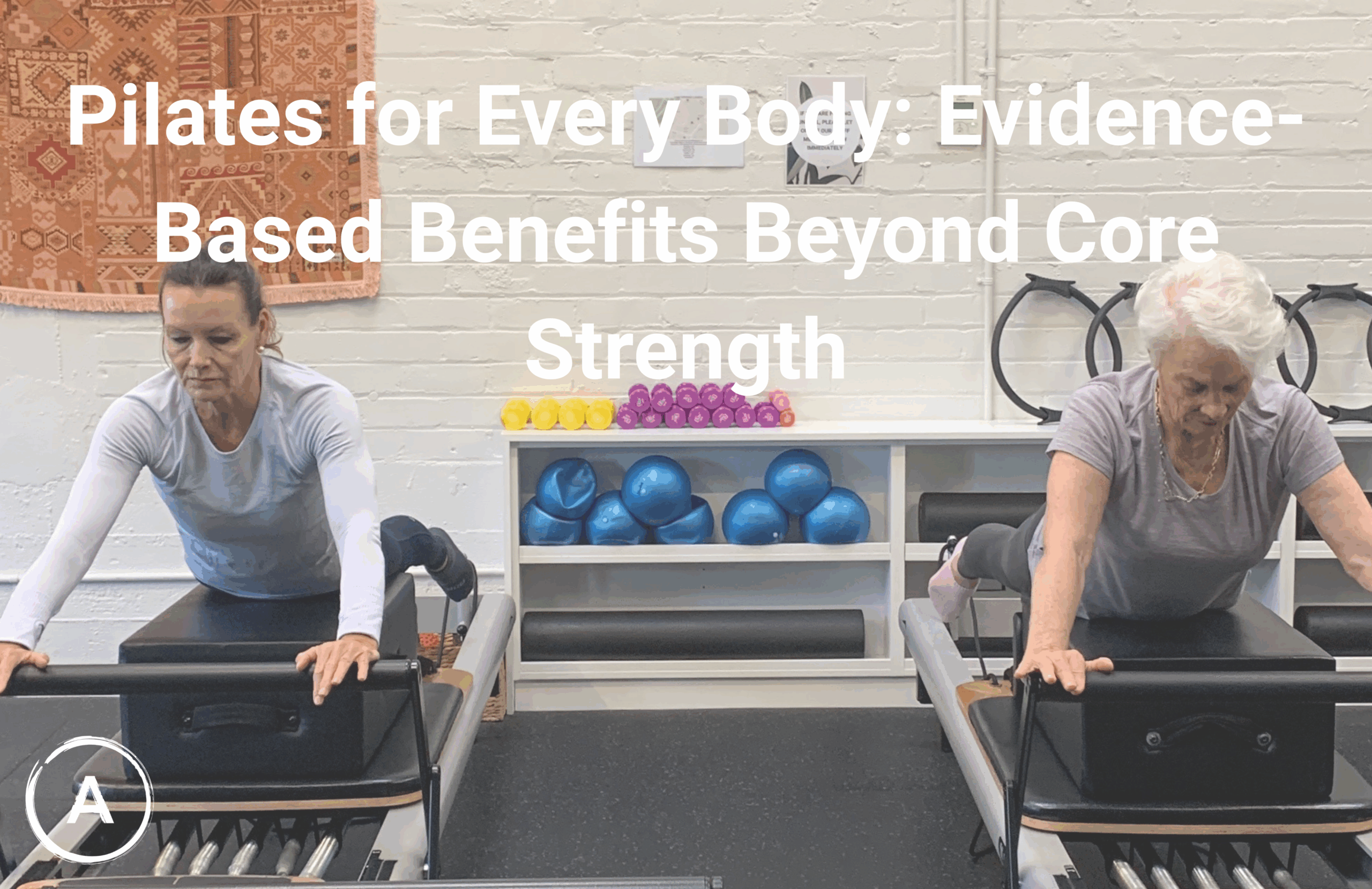
When most people think of Pilates, they picture toned abs, lean bodies, and celebrities sharing their latest workout routines on social media. While Pilates certainly strengthens the core, reducing it to an "ab workout" dramatically understates its therapeutic value. At Auckland Physiotherapy, we integrate Pilates-based exercises into rehabilitation programmes because the research demonstrates benefits far beyond aesthetic core strength.
Pilates is a mind-body exercise system developed by Joseph Pilates in the early 20th century, emphasizing controlled movements, breathing, concentration, and precision. Modern research has validated many of its principles, showing measurable improvements in balance, mental wellbeing, pain management, and functional movement across diverse populations—from older adults preventing falls to athletes optimizing performance, and chronic pain sufferers finding relief.
Let's explore what the evidence actually says about Pilates and why it deserves consideration as more than just another fitness trend.
Before examining the research, it's important to understand what defines Pilates:
Concentration: Mindful awareness of body position and movement quality throughout exercises.
Control: Precise, deliberate movements rather than momentum-driven actions.
Centering: Focus on the "powerhouse" (core muscles including abdominals, back, pelvic floor, and hip muscles) as the foundation for all movement.
Breathing: Coordinated breathing patterns that facilitate movement and enhance core engagement.
Precision: Attention to alignment, technique, and form in every exercise.
Flow: Smooth, continuous movement connecting one exercise to the next.
Mat Pilates: Exercises performed on a mat using body weight, sometimes with small props like resistance bands, circles, or balls.
Reformer Pilates: Uses a specialized machine with springs and a sliding carriage that provides variable resistance.
Clinical Pilates: Adapted by physiotherapists for rehabilitation, addressing specific injuries or conditions with individualized exercise prescription.
While equipment and settings vary, the fundamental principles remain consistent across all forms.
Let's start with what Pilates is best known for: core strengthening.
Multiple systematic reviews and meta-analyses demonstrate that Pilates effectively improves:
Core Muscle Activation: Studies using electromyography (EMG) show increased activation of deep core muscles—particularly transversus abdominis and multifidus—during Pilates exercises compared to traditional exercises.
Trunk Stability: Research indicates significant improvements in trunk stability and endurance following 8-12 weeks of Pilates training.
Functional Strength: Unlike isolated ab exercises, Pilates develops functional core strength that transfers to daily activities and sport performance.
Core strength isn't about aesthetics—it's about function:
One of the most compelling bodies of research examines Pilates for balance improvement, particularly in older adults.
A 2020 systematic review of 14 studies found that Pilates significantly improves both static and dynamic balance in older adults. Improvements were observed in:
Single-Leg Balance: Ability to stand on one leg with eyes open and closed increased by an average of 4-6 seconds after 8-12 weeks of Pilates.
Dynamic Balance: Tests measuring balance during movement (like the Timed Up and Go test) showed improvements of 10-15%.
Functional Reach: How far people could reach forward while maintaining balance improved significantly.
Berg Balance Scale: A comprehensive balance assessment showed clinically meaningful improvements after Pilates training.
Falls are a leading cause of injury and loss of independence in older adults. In New Zealand, one in three adults over 65 experiences a fall each year. Balance training through Pilates addresses multiple fall risk factors:
While fall prevention research focuses on older adults, balance improvements benefit everyone:
Emerging research demonstrates significant psychological benefits from Pilates practice.
Multiple studies show that regular Pilates practice reduces stress and anxiety levels:
A 2018 study of women practicing Pilates twice weekly for 8 weeks found:
A 2019 systematic review concluded that Pilates produces small to moderate improvements in anxiety and depression symptoms, comparable to other forms of exercise.
Mindful Movement: The concentration and body awareness required during Pilates promotes present-moment focus, similar to meditation.
Breathing Patterns: Controlled breathing activates the parasympathetic nervous system (rest-and-digest response), reducing stress hormones.
Physical Accomplishment: Mastering challenging movements builds self-efficacy and confidence.
Social Connection: Group classes provide community and social support.
Body Image: Improved strength, posture, and movement quality can enhance body satisfaction and self-perception.
Research shows that regular Pilates participation improves multiple quality of life domains:
A 2017 study of breast cancer survivors found that 12 weeks of Pilates improved quality of life scores by 18-25% across multiple domains.
Perhaps the most clinically significant research examines Pilates for chronic pain conditions.
Low back pain is where the evidence is strongest. Multiple high-quality systematic reviews conclude:
Pain Reduction: Pilates reduces pain intensity by an average of 1.5-2 points on a 10-point scale—a clinically meaningful improvement.
Disability Improvement: Functional disability scores improve significantly, allowing people to return to activities they'd avoided.
Long-Term Benefits: Unlike some interventions that provide only temporary relief, Pilates benefits persist for 6-12 months after training ends, suggesting lasting improvements in movement patterns and muscle function.
Comparative Effectiveness: Research comparing Pilates to other treatments (like general exercise, physiotherapy, or minimal intervention) consistently shows Pilates produces equal or superior outcomes.
A 2015 Cochrane Review (the gold standard of evidence synthesis) analyzed 10 randomized controlled trials involving 510 participants and concluded that Pilates reduces pain and disability in people with chronic low back pain.
Research on neck pain is growing:
Studies show that Pilates-based programmes:
A 2016 study comparing Pilates to conventional physiotherapy for chronic neck pain found both groups improved, but Pilates participants showed greater improvements in pain, function, and quality of life at 6-month follow-up.
Fibromyalgia—characterized by widespread pain, fatigue, and cognitive difficulties—is notoriously challenging to treat. However, research shows Pilates can help:
Pain Reduction: Studies report 20-30% reductions in pain scores.
Improved Function: Better physical function and ability to perform daily activities.
Reduced Fatigue: Significant improvements in energy levels and fatigue symptoms.
Better Sleep: Improvements in sleep quality and duration.
Enhanced Quality of Life: Overall quality of life improvements of 15-20%.
A 2017 systematic review concluded that Pilates is an effective intervention for fibromyalgia, producing improvements in pain, function, and quality of life.
For people with knee or hip osteoarthritis, Pilates offers:
Several mechanisms explain Pilates' effectiveness for chronic pain:
Improved Movement Patterns: Pilates retrains dysfunctional movement patterns that contribute to pain.
Muscle Balance: Addresses imbalances between weak and overactive muscles.
Core Stabilization: Supports the spine and reduces mechanical stress on painful structures.
Mind-Body Connection: The mindful awareness component may help "rewire" pain processing in the nervous system.
Graded Exercise: Pilates allows progressive loading at appropriate intensity, building tolerance without aggravating symptoms.
Low Impact: Controlled movements minimize joint stress while maintaining beneficial loading.
Modern life—sitting at desks, looking at phones, driving—creates predictable postural problems. Research shows Pilates effectively addresses these issues.
Studies demonstrate that Pilates:
Better posture translates to:
While not its primary focus, Pilates significantly improves flexibility and range of motion.
Studies show Pilates increases:
A 2016 systematic review found that Pilates improves flexibility to a similar or greater extent than traditional stretching programmes.
Adequate flexibility:
Athletes across various sports incorporate Pilates for performance benefits.
Research with athletes demonstrates:
Improved Core Endurance: Enhanced ability to maintain core stability during prolonged activity.
Better Movement Control: More precise, efficient movement patterns.
Injury Prevention: Reduced injury rates in athletes practicing Pilates regularly.
Enhanced Proprioception: Better body awareness improving technique and coordination.
Cross-Training Benefits: Active recovery that maintains fitness without high impact stress.
Studies in specific sports show:
Research demonstrates benefits across diverse groups:
Studies show Pilates during pregnancy:
Postpartum Pilates:
Beyond balance benefits, research shows Pilates helps older adults:
Emerging research examines Pilates for conditions like:
Research shows Pilates helps cancer survivors:
At Auckland Physiotherapy, we practice Clinical Pilates—Pilates principles applied within a physiotherapy framework.
Individualized Assessment: Comprehensive evaluation of movement patterns, strength, flexibility, and specific conditions.
Targeted Exercise Prescription: Exercises selected and modified based on individual needs, not generic class sequences.
Progressive Rehabilitation: Systematic progression from basic to advanced exercises as function improves.
Integration with Other Treatments: Combined with manual therapy, education, and other physiotherapy interventions.
Evidence-Based Practice: Application of current research to guide treatment decisions.
Injury-Specific Modifications: Adaptations for injuries, surgeries, or chronic conditions.
While Pilates is generally safe, following these guidelines optimizes benefits and minimizes risks:
Look for:
Begin with Basics: Master fundamental exercises before progressing to advanced movements.
Focus on Quality: Perfect form matters more than quantity or difficulty.
Communicate: Inform instructors about injuries, pain, or medical conditions.
Progress Gradually: Don't rush through levels or push into pain.
Be Consistent: 2-3 sessions weekly produces better results than sporadic practice.
Consider physiotherapist-led Clinical Pilates if you:
Research provides realistic expectations:
Pain Reduction: Often noticeable within 2-4 weeks, with continued improvement over 8-12 weeks.
Strength and Stability: Measurable improvements after 6-8 weeks of consistent practice.
Balance: Significant improvements typically seen after 8-12 weeks.
Flexibility: Noticeable changes within 4-6 weeks.
Postural Changes: May take 8-12 weeks for lasting improvements.
Mental Wellbeing: Stress reduction and mood improvements often noticed within 2-4 weeks.
Consistency is key—benefits accumulate with regular practice and may diminish with prolonged breaks.
While research supports Pilates benefits, it's important to acknowledge limitations:
Not a Complete Programme: Pilates should be part of a balanced fitness approach including cardiovascular exercise and, for some people, higher-intensity strength training.
Skill Required: Proper technique matters. Poor form reduces benefits and may increase injury risk.
Not a Quick Fix: Results require consistent practice over weeks and months.
Individual Variation: People respond differently. Some experience rapid improvements while others progress more gradually.
Contraindications: Certain conditions or acute injuries may require modifications or alternative approaches initially.
The research is clear: Pilates offers evidence-based benefits extending far beyond core strength. From reducing chronic pain to preventing falls, from improving mental wellbeing to enhancing athletic performance, Pilates serves diverse populations with varying needs.
At Auckland Physiotherapy, we've witnessed these benefits firsthand in countless clients. Whether you're managing chronic back pain, recovering from injury, wanting to prevent falls as you age, seeking stress relief, or optimizing athletic performance, Pilates-based exercise can be tailored to support your goals.
The key is finding the right approach—whether group mat classes for general fitness, reformer sessions for variety and challenge, or Clinical Pilates with a physiotherapist for specific rehabilitation needs.
Your body deserves movement that's mindful, controlled, and purposeful. Pilates offers exactly that, backed by growing scientific evidence demonstrating real, measurable benefits for every body.
Interested in exploring Clinical Pilates or learning whether it's right for your needs? Visit www.aucklandphysiotherapy.co.nz or contact Auckland Physiotherapy today to book an assessment and discover how Pilates can support your health and wellbeing.
Housed in the beautiful Foundation Precinct, sandwiched in-between Newmarket, Parnell & Remuera
This blog provides general information and is not a substitute for individual assessment. People with existing health conditions should consult with healthcare providers before beginning any new exercise programme.







Recent Comments