
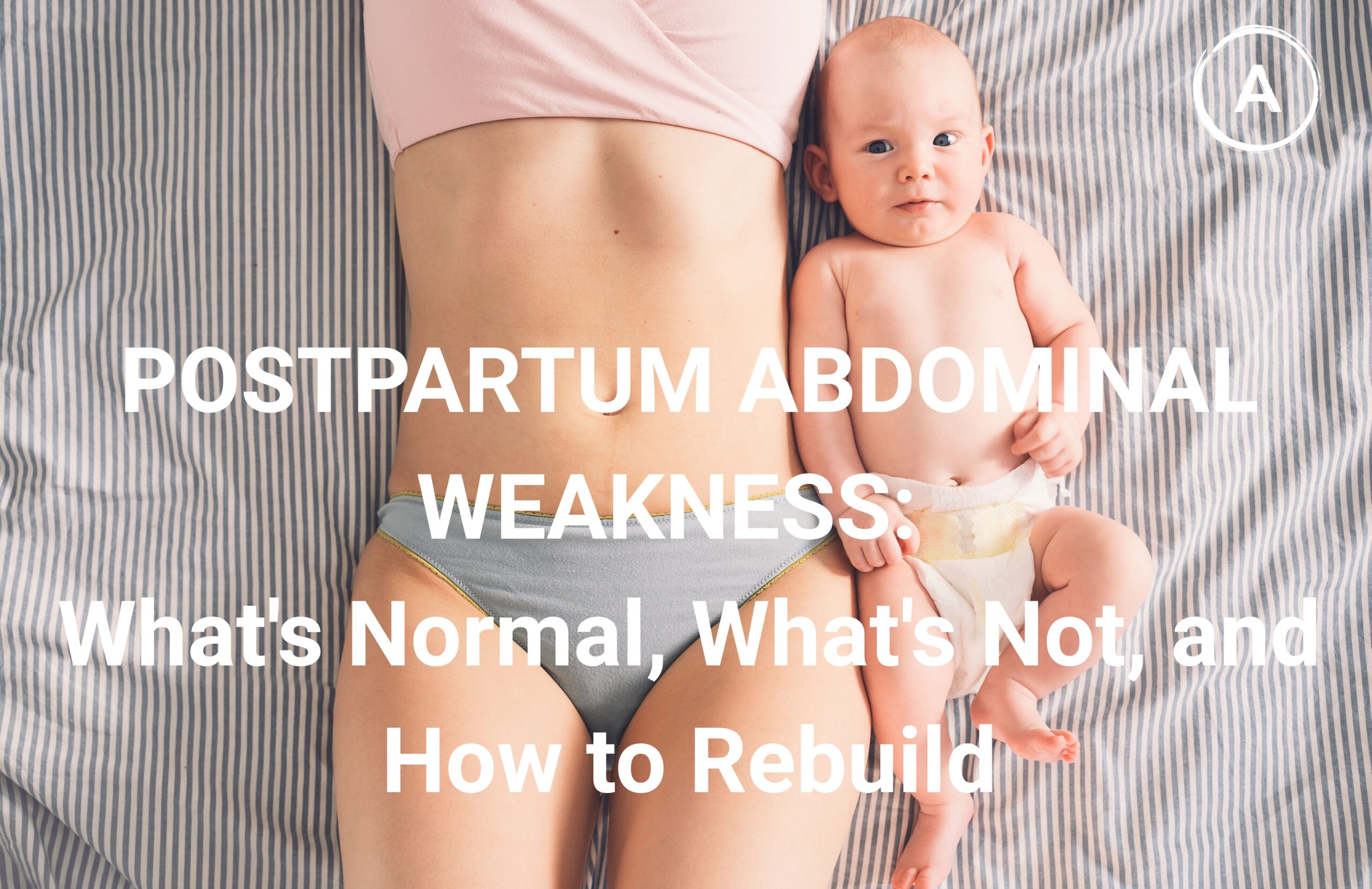
Postpartum Abdominal Weakness: What's Normal, What's Not, and How to Rebuild By the Auckland Physiotherapy Team · 7 min read · Auckland Physiotherapy, Newmarket
Having a baby changes your body in profound ways, and one of the most common concerns we hear from new mums is that their core just doesn't feel like it belongs to them anymore. Weakness, heaviness, a soft or domed tummy, or back pain that wasn't there before — these are all signs that your abdominal system needs some targeted attention. The good news is that with the right approach, most women can rebuild meaningful core strength and get back to the activities they love.
Experiencing postpartum abdominal weakness or pain? You'd need a 45-minute session with one of our pelvic health physios to properly assess what's happening and build a plan that's safe for your stage of recovery. 👉 Book a free call | Book now
What happens to your abdominals during pregnancy?
During pregnancy your abdominal muscles — including the rectus abdominis (the "six-pack" muscles), the obliques, and the deep transversus abdominis — are stretched significantly to accommodate your growing baby. The linea alba, the connective tissue that runs down the centre of your abdomen, also stretches and widens. This is a normal and necessary part of pregnancy.
After birth, many women find their abdominals feel weak, unresponsive, or simply different. This is not a failure on your part — it is a predictable consequence of what your body has been through. The question is not whether your core has changed, but how to help it recover well.
What is diastasis recti?
Diastasis recti refers to the separation of the two sides of the rectus abdominis muscle along the midline. Some degree of separation is present in the majority of women by the third trimester — it is how your body makes room for your baby. What matters postpartum is not simply whether a gap exists, but whether the linea alba has sufficient tension and load transfer capacity to support normal function.
Signs that diastasis may be affecting you include a doming or coning along the midline when you sit up, lower back pain, pelvic girdle discomfort, or difficulty with activities like lifting, carrying, and returning to exercise. A pelvic health physiotherapist can assess this properly and tell you exactly what you are dealing with.
Related reading:
What about the pelvic floor?
The abdominal system and pelvic floor work together as part of the same pressure management system. Weakness or poor coordination in the pelvic floor often accompanies postpartum abdominal weakness, and vice versa. This is why a postpartum assessment should always look at both — not just the tummy, but also how the pelvic floor is functioning, particularly if you are experiencing any leaking, heaviness, or prolapse symptoms.
If you have any of these symptoms, they are worth getting assessed. They are common after having a baby, but they are not something you simply have to accept.
A proper postpartum assessment looks at both your abdominals and your pelvic floor together — not just one or the other. 👉 Book a free call | Book now
When is it safe to start exercising again?
There is no single universal answer to this, because the right timeline depends on your birth experience, how your body is healing, and what type of exercise you want to return to. General guidance includes:
The "six-week check" with your GP or midwife is a useful milestone, but it does not replace a dedicated postpartum physiotherapy assessment. Many women leave that appointment without any specific guidance on core or pelvic floor rehabilitation.
What does good postpartum core rehabilitation look like?
Effective postpartum rehabilitation starts from the inside out. Rather than jumping straight to planks or sit-ups, the focus initially is on reconnecting with the deep core system — the transversus abdominis and pelvic floor — and ensuring these muscles are both activating and relaxing correctly. From there, exercises are progressively loaded to rebuild strength and tolerance for the demands of everyday life and, eventually, exercise.
Common areas addressed include:
Pilates is often an excellent tool at this stage, particularly clinical pilates supervised by a physiotherapist who can monitor your form and progress your programme safely.
What to avoid in the early postpartum period
In the early weeks, certain exercises can place more load on the healing abdominal and pelvic floor system than it is ready for. These include traditional crunches and sit-ups, double-leg lowering exercises, high-impact activity, and heavy lifting without proper bracing technique. This does not mean these things are permanently off limits — it simply means the timing and sequencing of your return matters.
Related reading:
Ready to start rebuilding with confidence?
You'd need a 45-minute session with one of our pelvic health physios to properly assess your abdominal and pelvic floor function and build a plan that's right for your stage of recovery. Not sure where to start? Book a free call first.
👉 Book a free comp call | Book now
How we can help:
This article is for educational purposes only and does not constitute medical advice. Please consult a qualified health practitioner before beginning any postpartum exercise programme.







Recent Comments