
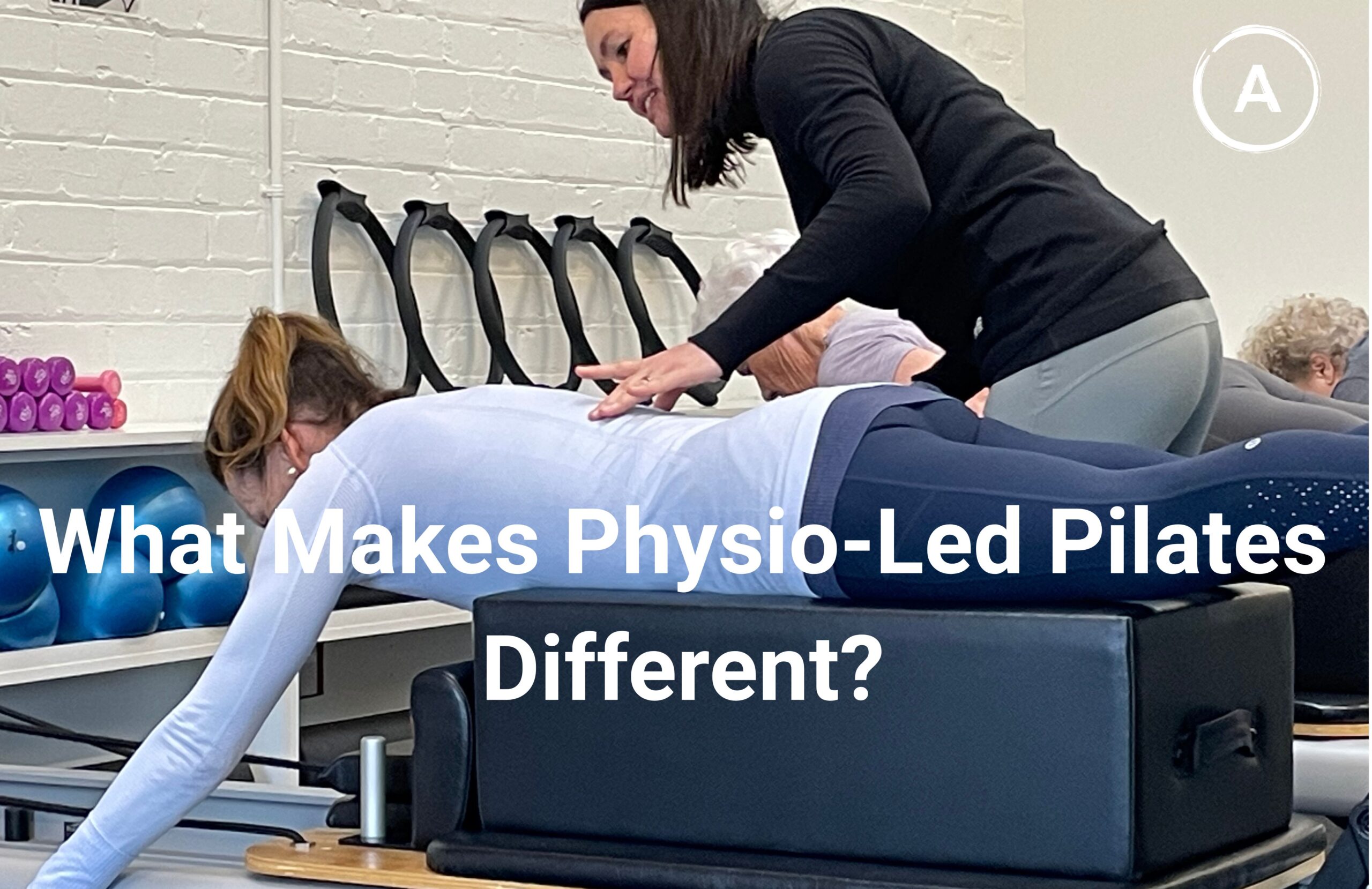
What Makes Physio-Led Pilates Different? By the Auckland Physiotherapy Team · 6 min read · Auckland Physiotherapy, Newmarket
Pilates has never been more popular — and for good reason. It builds strength, improves posture, and leaves most people feeling better in their body. But not all Pilates is the same, and if you are dealing with an injury, recovering from surgery, managing persistent pain, or returning to exercise postpartum, the difference between a general fitness class and physiotherapist-led clinical Pilates is significant.
Wondering if clinical Pilates is right for your situation? You'd need a 45-minute session with one of our physios to properly assess where you're at and design a programme that matches your body and your goals. 👉 Book a free call | Book now
What is clinical Pilates?
Clinical Pilates is a form of Pilates that is prescribed and supervised by a physiotherapist. It uses the same foundational movements and equipment — including the Reformer — as general Pilates, but the programme is individually designed based on a thorough physiotherapy assessment of your posture, movement patterns, strength, and the specific demands of your condition or goal.
At Auckland Physiotherapy, we ask everyone joining our studio classes to complete a 45-minute one-on-one session first. This is not a formality — it is how we make sure you start in the right place and progress safely.
The key differences
It starts with a proper assessment. In a general fitness Pilates class, the instructor observes the group and offers general cues. In clinical Pilates, your physiotherapist assesses how your individual body moves before you do a single exercise. This includes looking at your posture, breathing mechanics, how you activate your deep stabilising muscles, and any movement compensations that may be driving your symptoms.
The programme is built around you. Your clinical Pilates programme is not a set class sequence — it is designed specifically for your body, your history, and your goals. Two people in the same session may be doing entirely different exercises, because what each person needs is different.
Your physio can identify what is actually happening. A Pilates instructor can see that your hip drops when you do a single-leg exercise. A physiotherapist can tell you why — whether it is a hip abductor weakness, a pelvic control issue, or something in your movement history — and correct the cause, not just the symptom.
Progression is clinically guided. In general Pilates, you progress when the instructor observes that you are ready or when you feel comfortable. In clinical Pilates, progression is based on your physiotherapist's assessment of whether your neuromuscular system is genuinely ready for the next load — which protects you from re-injury or reinforcing poor movement patterns.
Related reading:
Who is clinical Pilates suited to?
Clinical Pilates can be beneficial across a wide range of presentations. At Auckland Physiotherapy it is commonly used for:
It is also used alongside general physiotherapy treatment — your Pilates sessions and your physio appointments can complement each other as part of a single, coordinated care plan.
Can I also join a group class?
Yes. At Auckland Physiotherapy, group Pilates classes are available through the Loft Pilates studio, including Reformer, Studio, and Reformer/Mat formats. Classes are kept small to ensure every participant is exercising safely and effectively, and the instructors can provide variations to suit different levels. The individual 45-minute session before joining a class means your instructor already understands your body before you walk through the door for the first time.
Is it covered by ACC or health insurance?
Clinical Pilates at Auckland Physiotherapy can be accessed under ACC for eligible conditions, and some Southern Cross health insurance plans also cover clinical Pilates sessions. Contact our team on 09 366 4480 if you have questions about what applies to your situation.
Related reading:
Ready to try physio-led Pilates?
You'd need a 45-minute one-on-one session to get started — this is how we make sure your programme is built around your body, not a generic template. Not sure if it's right for you? Book a free call first.
👉 Book a free comp call | Book now
How we can help:
This article is for educational purposes only and does not constitute medical advice. Please consult a qualified health practitioner before beginning any new exercise programme.
Tags: Clinical Pilates · Physio-led Pilates · Reformer Pilates · Core strength · Rehabilitation · Newmarket







Recent Comments