
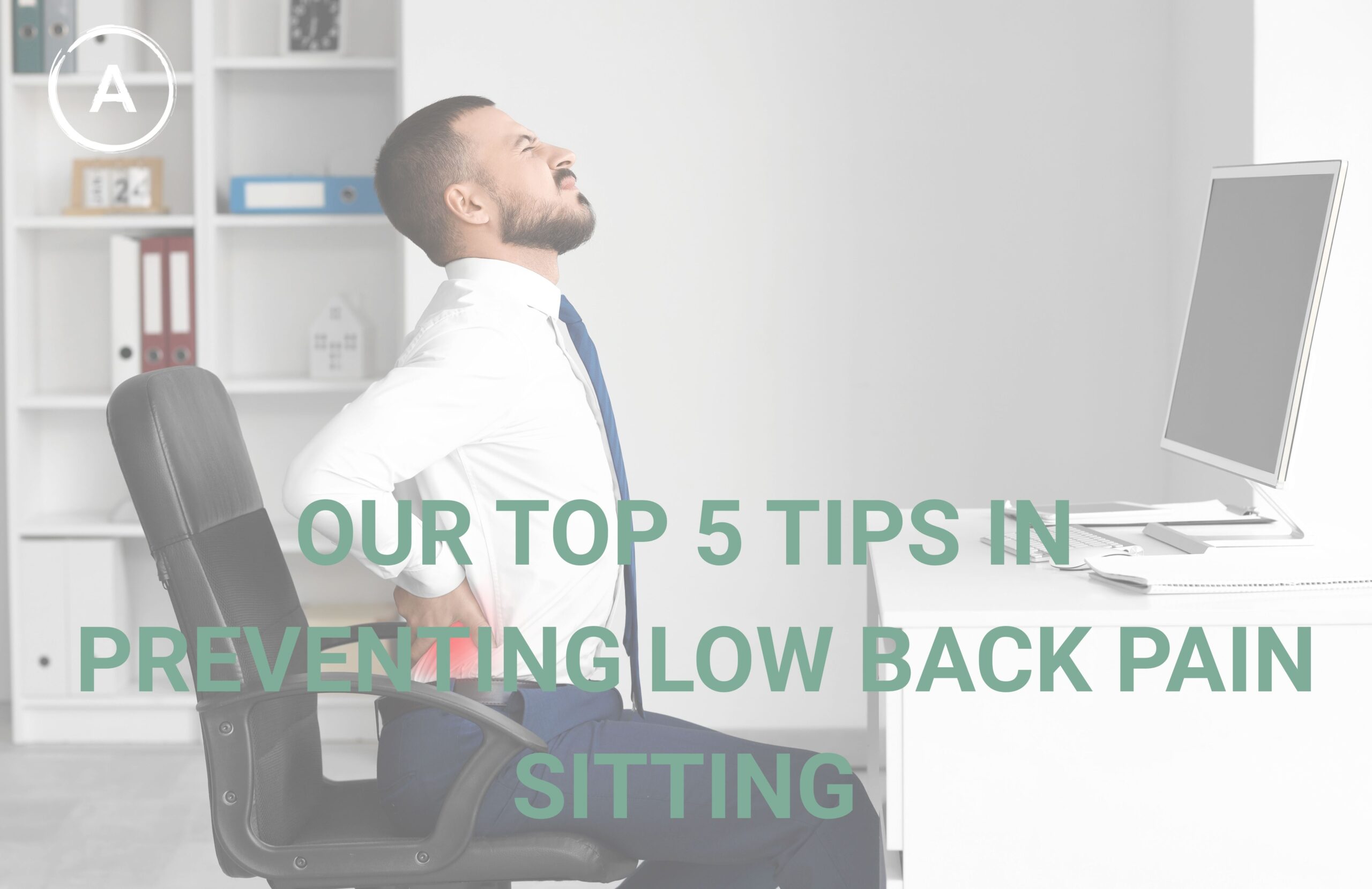
If you spend a large part of your day sitting at a desk, in the car, or commuting, you may notice that your lower back starts to feel stiff, achy or uncomfortable. While sitting itself isn't necessarily the cause of low back pain, spending long periods in one position can contribute to stiffness and discomfort. The good news is that there are some simple things you can do throughout the day to reduce your risk and keep your back moving well. Here are our five top tips for preventing low back pain when sitting.
1. Keep Moving
Our bodies aren't designed to sit in one position all day. Rather than trying to find the "perfect" sitting position and staying there for hours, focus on changing position and moving regularly. As a general guide, try to get up and move around every 30 minutes. You can also build small pockets of movement into your day without needing to schedule a full workout. For example: - Park a little further away, getting off the bus a stop before yours or going for a 10 minute power walk after lunch.
2. Sort Out Your Desk Space
Here's something that might surprise you: having perfect posture 24/7 isn't actually what prevents pain. Your body is designed to move, not to hold one "ideal" position all day. That said, if you're clocking long hours at a desk, it's worth paying attention to your setup.
Small adjustments to your chair height, screen position, and keyboard angle can make a real difference to how your spine is loaded over the course of a day. If you tend to slump through your lower back, we also recommend trying a lumbar support roll — a simple, inexpensive way to support your natural spinal curve and take some of the strain off your lower back.
3. Stretch Out Your Hip Flexors
Prolonged sitting keeps your hip flexors — the muscles at the front of your hip — in a shortened position for hours at a time. Over time, this can cause them to tighten up. Tight hip flexors pull on the pelvis and alter its position, which places extra pressure through the lower back.
Regular hip flexor stretches throughout the day can help release this tension and take unnecessary load off your lumbar spine.
4. Mobilise Your Middle Back
Your lower back often takes the blame for stiffness that actually starts higher up. The middle back (thoracic spine) can stiffen up significantly with long periods of sitting, and when it doesn't move well, your lower back tends to compensate — leading to overuse and pain.
Two great ways to keep this area moving:
Extensions over a foam roller to counteract the forward-hunched position most of us fall into at a desk
Rotations in side lying to encourage rotation through the thoracic spine
5. Lumbar Extensions for Prophylactic Disc Health
Sitting places sustained pressure on the discs in your lower back. Gentle lumbar extension exercises — think small, controlled backward bends — can help counteract this pressure and support disc health before problems start. Think of this as preventative maintenance for your spine, not just something to do once pain shows up.
If you do start to notice aches or pain, the first step is simple: make a couple of changes based on the tips above and give it a few days. Often, small tweaks to your setup and movement habits are enough to settle things down.
But if it doesn't improve, don't wait it out. Book in with one of our low back pain experts sooner rather than later. Getting an accurate diagnosis and starting the right treatment early makes recovery easier and faster. Just as importantly, we'll help you understand why it happened in the first place — so you've got the tools to stop it coming back.
Dealing with low back pain from sitting? Our team at Auckland Physiotherapy in Auckland specialises in getting to the root cause of low back pain, not just treating the symptoms. Book online an appointment today or if you're unsure, book a free phone consultation with one of our experts.







Recent Comments